

More Than Numbers: The Mathematical Foundation in Early Childhood
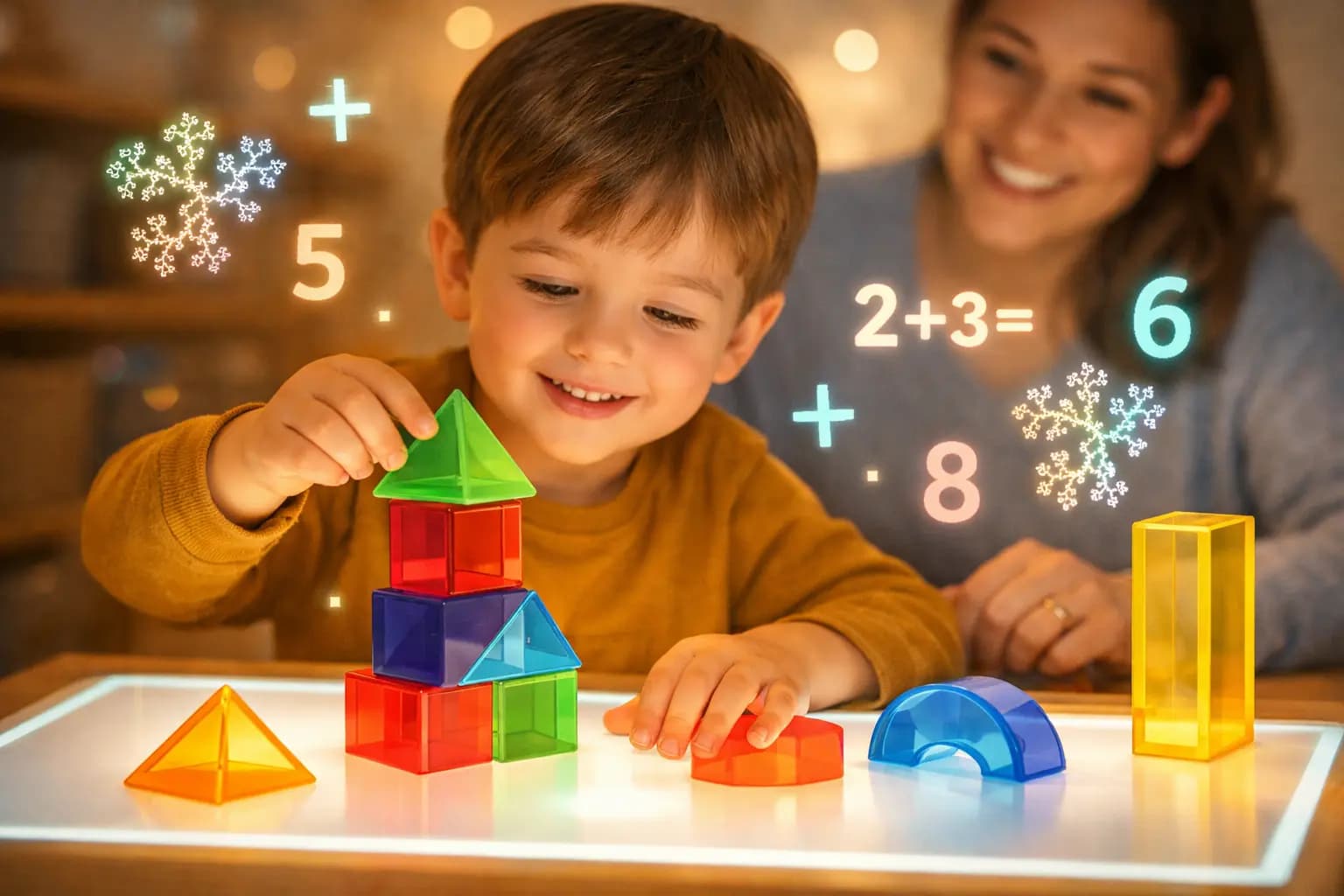
Hello, colleagues and families! In this year 2026, where Artificial Intelligence seems to solve everything, there is one human skill that remains the pillar of all critical thinking: Mathematics. But I’m not talking about complex equations; I’m talking about that spark that ignites when a child counts their toys or discovers a pattern in the leaves of a tree.
Today we analyze why the early years are the "golden age" for numbers and how constant practice defines the future.
Brain Plasticity: The Moment is Now
During early childhood, the brain is like a high-fidelity sponge. Learning mathematics at this stage isn’t just about "learning to count"—it’s about hardwiring the brain for logical reasoning, memory, and attention. When a child identifies shapes or compares sizes, they are training neurons to solve complex problems in their adult life.
Building the Skyscraper of Knowledge
No one builds a house starting with the roof. Basic concepts—quantities, sequences, and patterns—are the foundations. A child who develops mathematical confidence from a young age won't see algebra or calculus as "monsters" in high school, but as a natural evolution of what they already know.
The Power of Practice (Without Pressure)
This is where many fail. Mathematics is not mastered by "divine inspiration," but through consistent practice. But beware: in 2026, we know that practice shouldn’t be tedious:
- Play and Routine: Sorting objects at home or measuring ingredients while cooking are powerful mathematical exercises.
- Self-esteem: Every small challenge solved is another brick in a child's confidence. Regular practice reduces math anxiety, that fear that paralyzes so many students.
Profe's Note: Don’t over-saturate little ones with screens that provide automatic results. Real mathematics is touched, felt, and practiced. The secret isn't doing 100 exercises in one day, but making numbers part of their daily narrative. The mathematical brain is built step by step, with patience and consistency.
Our Recommendation: Reforzamiento Matemático
We know that as parents or educators, we sometimes need expert guidance to make this process effective and motivating. That’s why we recommend visitingReforzamiento Matemático, the ideal space where the importance of early childhood mathematics is handled with the seriousness and dedication your children deserve. On their platform, you will find the necessary support to turn constant practice into your children's greatest academic asset.